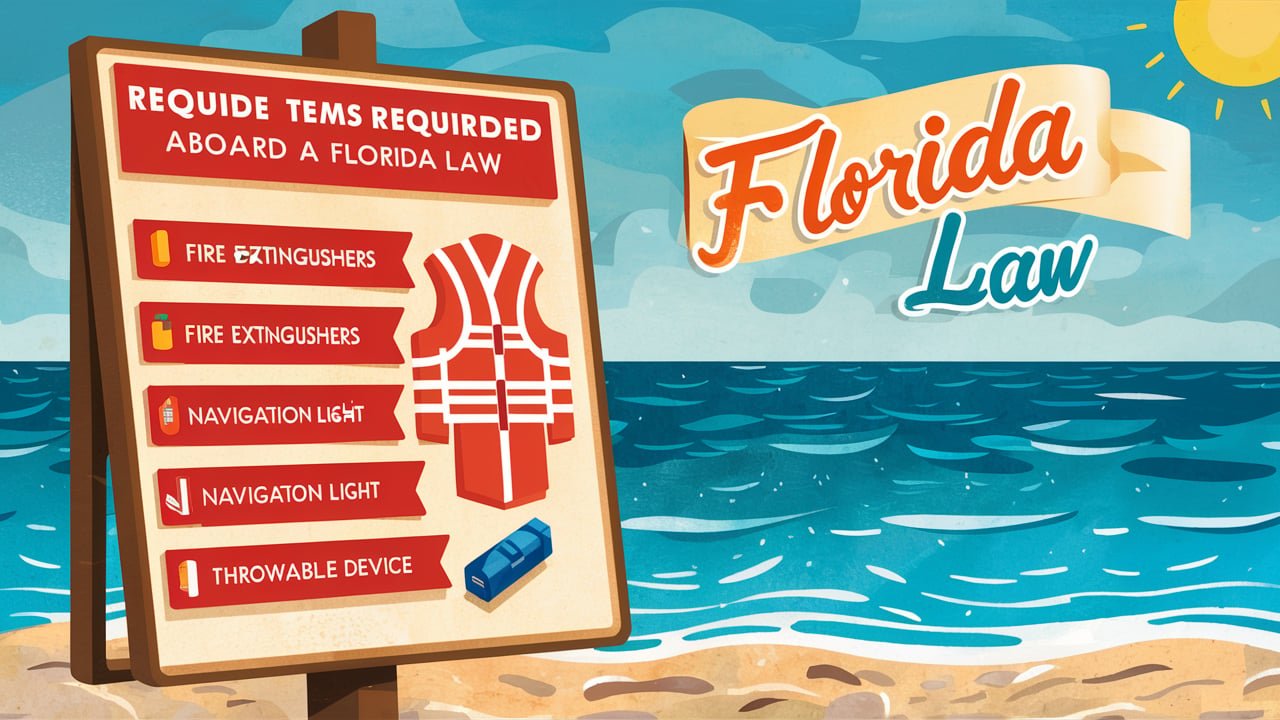
When heading out on the water in Florida, whether for recreation or work, understanding according to Florida law what must be aboard a vessel is critical for both safety and legal compliance. Florida has some of the busiest waterways in the United States, and the state’s regulations are designed to protect everyone who enjoys boating. These rules encompass essential safety gear, proper documentation, and licensing requirements that every vessel operator and passenger should know. In this extensive guide, we break down the legal requirements for what must be aboard a vessel under Florida law, explain why these requirements exist, and provide detailed examples and interpretations of statutes and regulations to help boaters stay informed.
Mandatory Safety Equipment: What Florida Law Requires Aboard Every Vessel
Personal Flotation Devices (PFDs): Life Jackets for Every Person Aboard
One of the most important elements of according to Florida law what must be aboard a vessel is personal flotation devices (PFDs). Every recreational boat must carry a U.S. Coast Guard (USCG)-approved wearable PFD for each person on board, and these devices must be in good, serviceable condition and easily accessible.
For vessels 16 feet in length or longer, the law additionally requires at least one throwable Type IV PFD that must be immediately available to assist in a man-overboard situation.
Importantly, children under the age of six must wear a USCG-approved PFD while the vessel is underway if the vessel is less than 26 feet long.
Fire Extinguishers: Protection Against Onboard Fires
Florida law mandates that certain vessels carry fire extinguishers, especially motorized boats and those with enclosed engine compartments or fuel tanks. The number and type of extinguishers required depend on the length and configuration of the vessel. Typically, smaller recreational boats are required to carry at least one USCG-approved portable fire extinguisher, while larger boats must carry additional units or different types as specified by federal and state safety standards.
These devices must be accessible and maintained so they can function properly in the event of an emergency. Fire extinguishers are crucial for taming fires caused by fuel leaks, electrical malfunctions, or similar hazards.
Visual Distress Signals (VDS): Be Seen in Emergencies
Another key requirement under Florida law what must be aboard a vessel is visual distress signals. Boats operating on coastal waters—including the Atlantic Ocean, Gulf of Mexico, and large bays—must carry USCG-approved visual distress signals for both day and night use.
These signals may include daytime orange smoke or flags and nighttime flares or electronic distress lights. Keeping unexpired and accessible visual distress signals increases the chances of being noticed and rescued during emergencies.
Sound-Producing Devices: Communicating on the Water
Every boat must have an efficient sound-producing device aboard, such as a horn, whistle, or bell. These devices are essential for signaling intentions and alerting other boaters, especially in situations with reduced visibility or heavy traffic.
For larger vessels (over 39.4 feet), additional sound signaling equipment such as both a horn and a bell may be required by navigation rules, reflecting the need for clear communication on busy waterways.
Navigation Lights: Required for Night and Low Visibility
To comply with according to Florida law what must be aboard a vessel, all boats must be equipped with properly functioning navigation lights when operating between sunset and sunrise or during restricted visibility conditions like fog.
These lights—typically red and green sidelights and a white stern light—inform other boaters about your vessel’s size and direction, helping to prevent collisions.
Documentation and Operator Credentials: Legal Requirements Aboard Your Vessel
Registration and Titling Documentation
Under Florida Statutes, motorized vessels and most recreational boats must be titled and registered. A valid certificate of registration must be carried on board whenever the boat is in operation and be available for inspection by a law enforcement officer.
This registration must display the vessel’s approval numbers, hull identification number, owner’s name, and, in most cases, the owner’s address.
Boating Safety Education Card and Identification
Florida law also requires that certain operators have proof of boating safety education aboard the vessel. If you were born on or after January 1, 1988 and operate a vessel with an engine of 10 horsepower or greater, you must have photographic identification and a Florida boating safety identification card or equivalent documentation from another jurisdiction.
Such documentation proves that the operator has completed an approved boating education course, which is critical for safe and responsible navigation of Florida’s waterways.
Special Requirements and Additional Equipment
Florida law also encourages or requires specific equipment depending on vessel size and type. For example:
-
Engine cutoff switches on boats under 26 feet with sufficient horsepower, designed to stop the vessel if the operator falls overboard.
-
Diver-down flags to signal whether diving or snorkeling activity is taking place nearby.
-
Ventilation systems for vessels with gasoline engines in enclosed spaces built after certain dates.
These additions enhance safety and ensure legal compliance in varied boating situations.
Why These Requirements Matter: Safety, Compliance, and Responsibility
Understanding according to Florida law what must be aboard a vessel isn’t just about avoiding fines or citations—it’s about ensuring the safety of every person on the water. Required safety equipment like PFDs, fire extinguishers, navigation lights, visual distress signals, and sound-producing devices directly contribute to minimizing risks from accidents, weather changes, and emergencies.
Furthermore, proper documentation and education credentials demonstrate a commitment to responsible boating and adherence to state law.
Conclusion: Staying Safe and Legal on Florida Waters
According to Florida law what must be aboard a vessel includes a range of mandatory safety equipment, documentation, and operator credentials designed to protect life and property on the water. From U.S. Coast Guard–approved PFDs and throwable devices to fire extinguishers, navigation lights, and distress signals, these requirements are backed by Florida Statutes and federal regulations. Additionally, proper vessel registration and proof of boating education are essential elements of lawful operation. Educating yourself and equipping your vessel correctly ensures you can enjoy Florida’s beautiful waterways with confidence and legal peace of mind.
Frequently Asked Questions (FAQ)
Q: What is the most important item that must be aboard every vessel in Florida?
A: Every person on board must have a USCG-approved personal flotation device (PFD), and these must be readily accessible.
Q: Are fire extinguishers required on all vessels?
A: Fire extinguishers are required on motorized vessels and those with enclosed fuel compartments, with the number and type dependent on vessel size.
Q: Do I need to carry my vessel’s registration?
A: Yes, registration documents must be aboard and available for inspection when the vessel is operating.
Q: Is a boating safety card required aboard the vessel?
A: Yes, operators born after January 1, 1988, must have proof of boating safety education aboard.
Q: Are visual distress signals mandatory?
A: Yes, visual distress signals approved by the U.S. Coast Guard are required for vessels operating on coastal or large bodies of water.