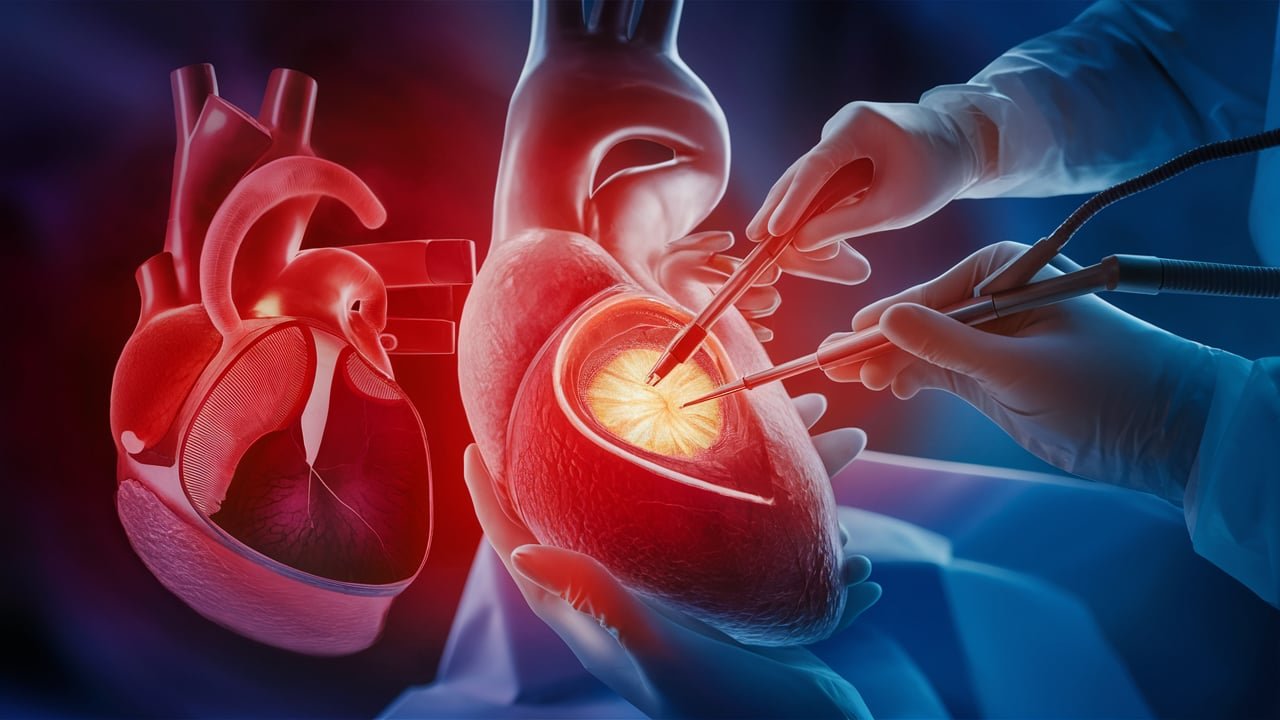
Premature Ventricular Contractions (PVCs) are among the most frequently encountered cardiac rhythm disturbances in clinical practice. While often benign, a high burden of PVC arrhythmia can lead to significant symptoms, reduced quality of life, and in some cases PVC-induced cardiomyopathy. PVC ablation has emerged as a highly effective, minimally invasive interventional therapy designed to precisely target and eliminate the electrical focus responsible for abnormal ventricular beats. In this article, we present a comprehensive, authoritative, and detailed exploration of PVC ablation, focusing on mechanisms, indications, procedural techniques, outcomes, and long-term benefits.
Understanding Premature Ventricular Contractions
Premature Ventricular Contractions originate from ectopic electrical impulses arising in the ventricles rather than the sinoatrial node. These early beats disrupt the normal cardiac rhythm, often perceived as palpitations, skipped beats, or chest discomfort. In patients with frequent PVCs, typically defined as more than 10–15% of total heartbeats, the continuous electrical instability can compromise ventricular efficiency and lead to progressive myocardial dysfunction.
What Is PVC Ablation?
PVC ablation is an advanced electrophysiological procedure that uses targeted energy delivery to eliminate the specific myocardial tissue responsible for generating abnormal ventricular impulses. Guided by sophisticated three-dimensional electroanatomic mapping systems, electrophysiologists precisely locate the PVC origin and apply radiofrequency ablation or cryoablation to permanently suppress the arrhythmia source.
Indications for PVC Ablation
We recommend PVC ablation in patients with persistent symptoms despite optimal medical therapy, intolerance to antiarrhythmic drugs, or evidence of PVC-induced cardiomyopathy. Ablation is particularly beneficial when PVCs originate from discrete, identifiable foci such as the right ventricular outflow tract (RVOT), left ventricular outflow tract, or papillary muscles. In structurally normal hearts, ablation offers a durable solution with minimal long-term risk.
Pre-Procedural Evaluation and Planning
A comprehensive pre-ablation evaluation is essential to optimize outcomes. This includes 24-hour Holter monitoring to quantify PVC burden, echocardiography to assess ventricular function, and cardiac MRI when structural abnormalities are suspected. Detailed mapping strategies are planned to ensure accurate localization of the PVC focus, minimizing procedure time and maximizing success.
The PVC Ablation Procedure Explained
During catheter ablation for PVCs, we access the heart via femoral venous or arterial routes under fluoroscopic and electroanatomic guidance. Mapping catheters record intracardiac signals, allowing precise identification of the earliest activation site of the PVC. Once confirmed, controlled energy is delivered to ablate the arrhythmogenic tissue. The procedure typically lasts between one and three hours and is performed under conscious sedation or general anesthesia, depending on clinical complexity.
Success Rates and Clinical Outcomes
Clinical studies consistently demonstrate PVC ablation success rates exceeding 80–90% in appropriately selected patients. In cases of PVC-induced cardiomyopathy, successful ablation often leads to significant improvement or normalization of left ventricular ejection fraction within months. Symptom relief is frequently immediate, with sustained rhythm control observed during long-term follow-up.
Safety Profile and Potential Risks
PVC ablation is considered a safe intervention with a low complication rate when performed by experienced operators. Potential risks include vascular access complications, cardiac perforation, or transient arrhythmias; however, these events are uncommon. Advances in mapping technology and procedural techniques continue to enhance safety and precision, making ablation a preferred strategy for many patients.
Recovery and Post-Ablation Care
Post-procedural recovery following PVC ablation is generally rapid. Most patients are discharged within 24 hours and resume normal activities within a few days. Follow-up includes repeat rhythm monitoring to confirm PVC suppression and echocardiographic assessment to evaluate ventricular function recovery. Long-term outcomes are highly favorable, particularly when underlying structural heart disease is absent.
Long-Term Benefits of PVC Ablation
The long-term benefits of PVC ablation extend beyond symptom control. Patients experience improved exercise tolerance, enhanced cardiac efficiency, and reduced risk of progressive heart failure associated with high PVC burden. By addressing the root cause of ventricular ectopy, ablation provides a durable and definitive solution that improves both clinical outcomes and quality of life.
Conclusion
PVC ablation represents a cornerstone in modern cardiac electrophysiology, offering a precise, effective, and lasting treatment for patients with symptomatic or high-burden premature ventricular contractions. Through meticulous evaluation, advanced mapping, and targeted energy delivery, we achieve exceptional success rates with minimal risk. As evidence continues to support its role in preventing cardiomyopathy and restoring normal rhythm, PVC ablation stands as a transformative therapy in contemporary arrhythmia management.
Frequently Asked Questions (FAQ)
Is PVC ablation permanent?
Yes, successful PVC ablation permanently eliminates the targeted arrhythmogenic focus, providing long-term rhythm control in most patients.
Who is an ideal candidate for PVC ablation?
Patients with symptomatic PVCs, high PVC burden, or PVC-induced cardiomyopathy who do not respond to or cannot tolerate medications are ideal candidates.
How soon are results seen after PVC ablation?
Symptom improvement is often immediate, while recovery of ventricular function may occur over weeks to months.
Can PVCs return after ablation?
Recurrence is uncommon but possible; repeat ablation can be considered if clinically indicated.
Is PVC ablation safer than long-term medication?
For many patients, PVC ablation offers a safer long-term alternative by avoiding chronic drug side effects and providing definitive arrhythmia control.