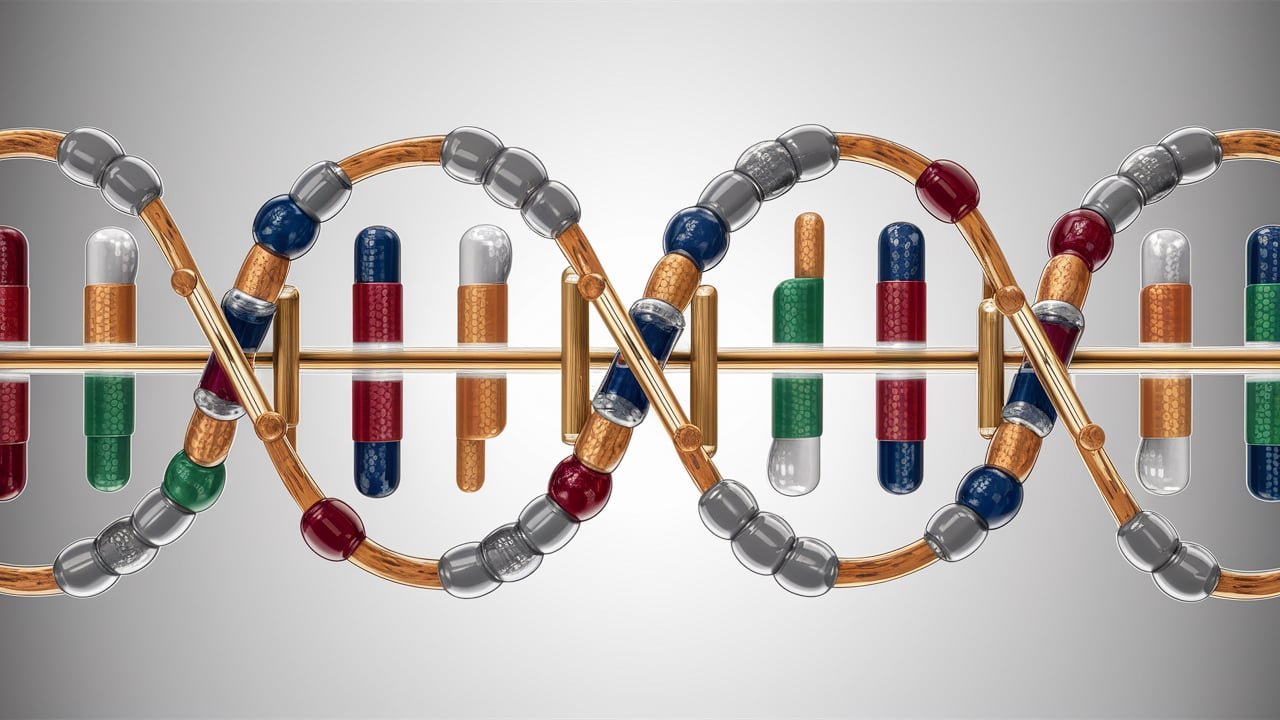
The term Nucleotides (plural of nucleotide) refers to the essential molecular units that form the foundation of all genetic material in living organisms. Nucleotides are the building blocks of DNA and RNA, the molecules that carry genetic information and control the synthesis of proteins. Without nucleotides, life as it is known would not exist. They are not only responsible for storing and transmitting hereditary information but also play a vital role in energy transfer, cellular communication, and metabolic regulation. Understanding nucleotides is fundamental to biology, genetics, medicine, and biotechnology. This article explores the structure, types, and functions of nucleotides, their role in evolution and medicine, and their significance in modern scientific research.
What Are Nucleotides?
Nucleotides are organic molecules composed of three main components: a nitrogenous base, a five-carbon sugar (pentose), and one or more phosphate groups. These three parts combine to form a stable structure that can link with other nucleotides to create long chains known as nucleic acids. In DNA, nucleotides form a double-stranded helix, while in RNA, they usually exist as a single strand. The sequence of nucleotides in DNA determines the genetic code, which dictates how proteins are built and how cells function. Each nucleotide acts as a letter in the genetic alphabet, and the specific order of these letters defines the unique genetic identity of every organism.
Structure of Nucleotides
The structure of nucleotides is crucial to their biological function. The nitrogenous base can be either a purine (adenine or guanine) or a pyrimidine (cytosine, thymine, or uracil). The sugar component is either deoxyribose in DNA or ribose in RNA. The phosphate group connects the sugars of adjacent nucleotides, forming the backbone of the nucleic acid chain. This structure allows nucleotides to form stable yet flexible molecules capable of storing vast amounts of genetic information. The specific pairing of bases—adenine with thymine (or uracil in RNA) and guanine with cytosine—ensures accurate replication of DNA during cell division, maintaining genetic stability across generations.
Types of Nucleotides
There are several types of nucleotides, each with distinct roles in biological systems. In DNA, the four main nucleotides are adenine (A), thymine (T), guanine (G), and cytosine (C). In RNA, uracil (U) replaces thymine. Beyond these genetic nucleotides, there are also specialized nucleotides that perform other vital functions. For example, adenosine triphosphate (ATP) acts as the primary energy currency of the cell, while guanosine triphosphate (GTP), cytidine triphosphate (CTP), and uridine triphosphate (UTP) participate in various metabolic and signaling processes. These molecules demonstrate the versatility of nucleotides, which serve not only as genetic components but also as key players in cellular energy and communication.
Function of Nucleotides in DNA and RNA
The function of nucleotides in DNA and RNA is to store, transmit, and express genetic information. In DNA, nucleotides form long double-stranded molecules that encode the instructions for building proteins. These instructions are transcribed into RNA, which then guides the synthesis of proteins in the ribosomes. Messenger RNA (mRNA) carries genetic information from DNA to the ribosome, transfer RNA (tRNA) brings amino acids to the growing protein chain, and ribosomal RNA (rRNA) forms part of the ribosome’s structure. This coordinated system ensures that genetic information is accurately translated into functional proteins, which perform nearly all cellular activities.
Nucleotides and Energy Transfer
One of the most important roles of nucleotides is in energy transfer within cells. Adenosine triphosphate (ATP) is the most well-known nucleotide involved in this process. ATP stores energy in its high-energy phosphate bonds, which can be broken to release energy for cellular activities such as muscle contraction, active transport, and biosynthesis. When ATP loses one phosphate group, it becomes adenosine diphosphate (ADP), and when it loses two, it becomes adenosine monophosphate (AMP). This continuous cycle of energy release and regeneration makes ATP the universal energy carrier in all living organisms. Other nucleotides, such as NAD⁺ and FAD, are essential cofactors in metabolic reactions, particularly in cellular respiration and energy production.
Importance of Nucleotides in Medicine and Biotechnology
In modern medicine and biotechnology, nucleotides play a central role in research, diagnostics, and therapy. Synthetic nucleotides are used in molecular biology techniques such as polymerase chain reaction (PCR), DNA sequencing, and genetic engineering. In medicine, nucleotide analogs are used as antiviral and anticancer drugs because they can interfere with the replication of viral or cancerous DNA. In genetic research, nucleotides are essential for understanding hereditary diseases, developing gene therapies, and advancing personalized medicine. Their versatility makes them indispensable tools in both scientific discovery and clinical applications.
Nucleotides and Evolution
The role of nucleotides in evolution is fundamental to understanding how life has developed over billions of years. Mutations, which are changes in the sequence of nucleotides, create genetic variation within populations. This variation is the raw material for natural selection, allowing species to adapt to changing environments. Over time, beneficial mutations accumulate, leading to the evolution of new traits and species. By comparing nucleotide sequences across different organisms, scientists can trace evolutionary relationships and reconstruct the tree of life. The study of nucleotides has revealed that all living organisms share a common genetic code, highlighting the unity of life at the molecular level.
Nucleotides in Modern Research and Technology
In the field of modern biotechnology, nucleotides are at the heart of groundbreaking innovations. Techniques such as CRISPR-Cas9 gene editing rely on precise manipulation of nucleotide sequences to modify genes and correct genetic defects. Synthetic biology uses nucleotides to design artificial DNA sequences that can produce new proteins or even entire synthetic organisms. In forensic science, nucleotide analysis is used for DNA fingerprinting, helping to solve crimes and identify individuals. In agriculture, genetic modification through nucleotide manipulation has led to crops with improved yield, resistance, and nutritional value. These applications demonstrate how nucleotides are not only the foundation of life but also the foundation of technological progress.
Conclusion
Nucleotidy are the fundamental building blocks of life, forming the basis of DNA and RNA, the molecules that define every living organism. Their structure allows them to store and transmit genetic information, while their chemical properties enable them to participate in energy transfer and cellular communication. From the smallest bacteria to the most complex humans, nucleotides are essential for growth, reproduction, and survival. In medicine, biotechnology, and evolutionary biology, nucleotides continue to unlock new frontiers of knowledge and innovation. Understanding these tiny molecules provides insight into the very essence of life and the mechanisms that sustain it.
Frequently Asked Questions (FAQ)
What are nucleotides?
Nucleotides are organic molecules that serve as the building blocks of DNA and RNA, storing and transmitting genetic information.
What are the main components of a nucleotide?
Each nucleotide consists of a nitrogenous base, a five-carbon sugar (ribose or deoxyribose), and one or more phosphate groups.
What is the difference between DNA and RNA nucleotides?
DNA nucleotides contain deoxyribose sugar and the base thymine, while RNA nucleotides contain ribose sugar and the base uracil instead of thymine.
What is the function of ATP?
Adenosine triphosphate (ATP) is a nucleotide that acts as the primary energy carrier in cells, providing energy for various biological processes.
Why are nucleotides important in medicine?
Nucleotides and their analogs are used in diagnostics, genetic research, and as antiviral or anticancer drugs that target DNA or RNA replication.